Pastures and camps
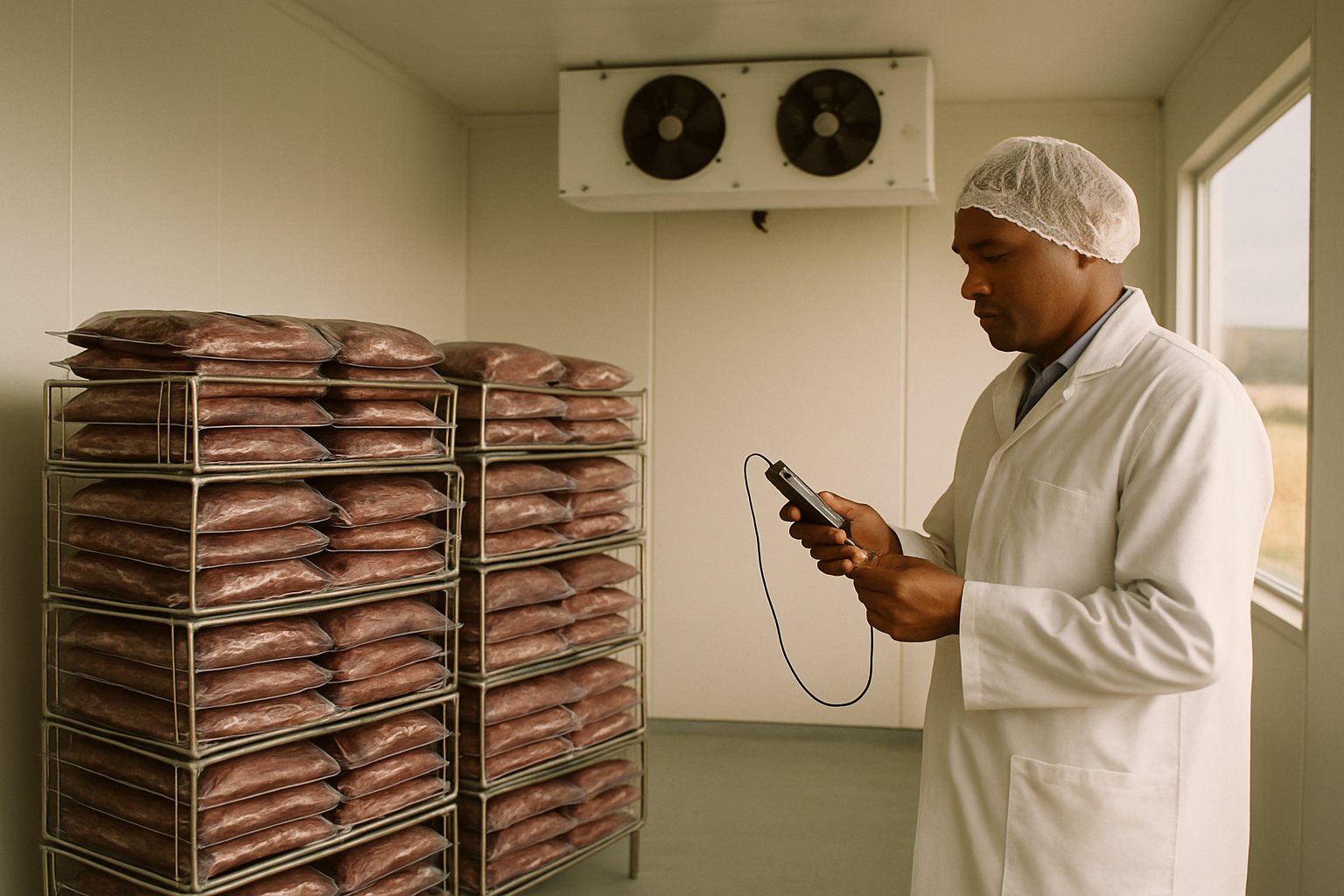
Our cold-chain lot pack system keeps each venison lot clearly labelled and traceable from harvest to delivery.
On our farms, every venison lot is tracked from harvest all the way to the customer, whether that's a chef, a butcher or a farm shop. Clear lot labelling gives full transparency, so chefs know exactly where and when their venison was harvested. This traceability is a legal requirement under the Meat Safety Act. On the farm, the same lot number goes on the movement sheet for each group of live deer, so the team knows which animals travel together and can load them quietly in their usual groups.
Clear lot packs also let our own staff, the abattoir team and the cold-chain drivers see at a glance which lot they are handling. The deer travel live in our stock trailer on the short run to the abattoir, and the lot pack starts there: once the animals are slaughtered and dressed, each carcass is tagged with its lot number before it goes into the abattoir chiller.
Once the venison is cut and packed at the abattoir, it goes into sturdy, washable crates with vented sides and closable lids. Each crate is labelled with the slaughter date, home camp, species and lot number, secured in a waterproof sleeve. When packing, we always double-check tags against the farm movement sheet and the abattoir records, so nothing gets muddled. Our venison provenance manager sees to it that the chiller and cold-room logs are kept current.
The abattoir chillers and our Karoo Edge cold room, where packed lots wait for collection, run on mains power with backup from batteries or a small diesel generator, so even if the power does go out in the Karoo winds, the cold chain stays unbroken. Longer deliveries to kitchens go in refrigerated vehicles with temperature loggers. The team checks thermometers regularly and logs every delivery. The lot pack system is also handy for keeping venison from different deer species separate, especially when moving between fallow, red, sika or chital lots.
After a long day, or with a delivery due, a crate label can go unchecked or a pack sheet unsigned. The biggest mistakes we see are smudged marker pen, labels peeling off in the cold, or the wrong lot number written on a sleeve. In the hot berg wind season, it’s worth checking that labels haven't faded or gotten wet from condensation, which can sometimes make the writing hard to read.
Each season, we set time aside to replace worn sleeves, restock waterproof pens, and test the lid clips on every crate. We also check our backup batteries ahead of the summer heat, so the Karoo Edge cold room keeps running even in the worst drought. Our venison provenance manager reminds the team to update the lot register before any group of deer leaves the farm, as that's the main way to avoid confusion later on.