Pastures and camps
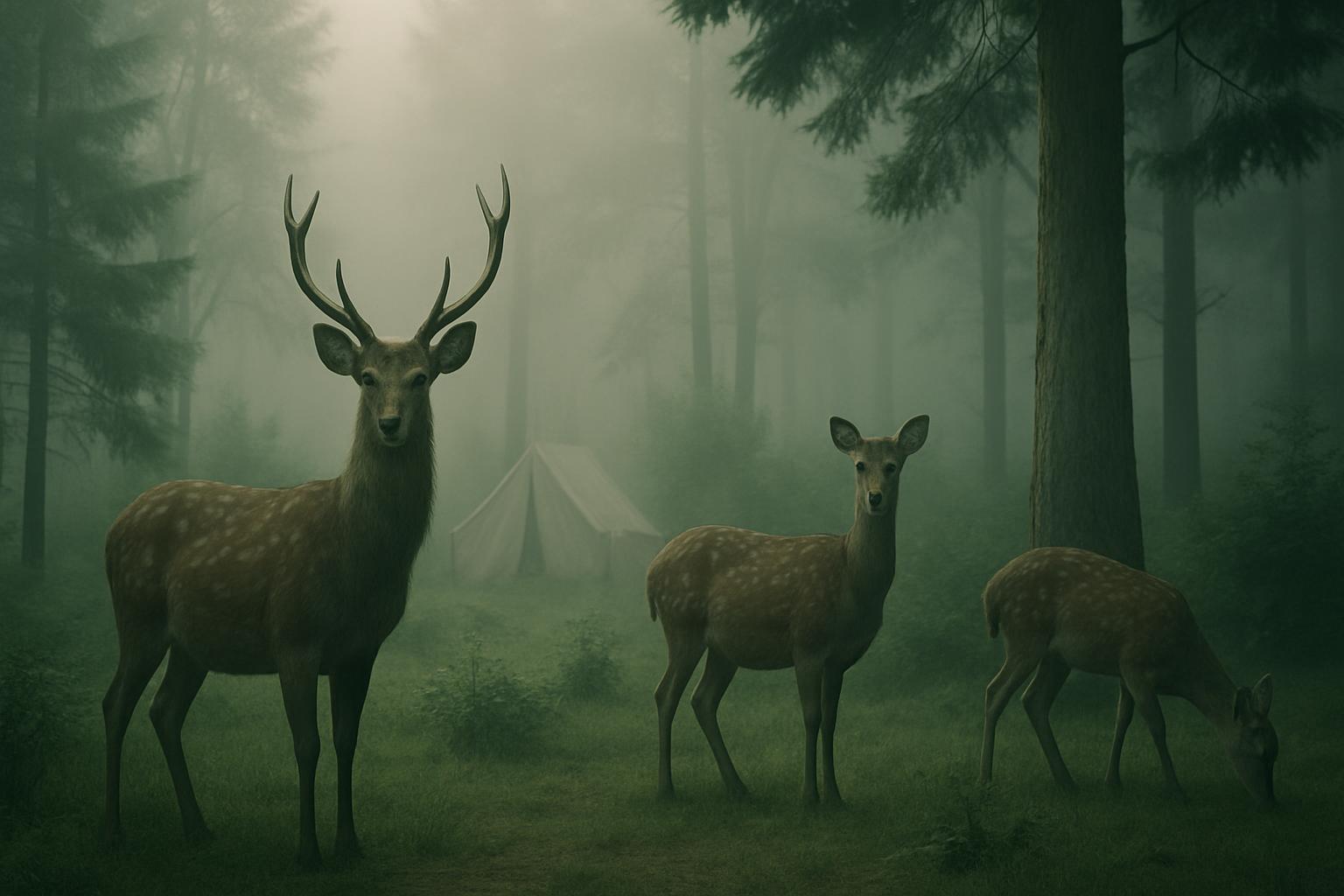
Smaller, well-planted sika turf camps help these quiet deer settle and thrive on South African farms.
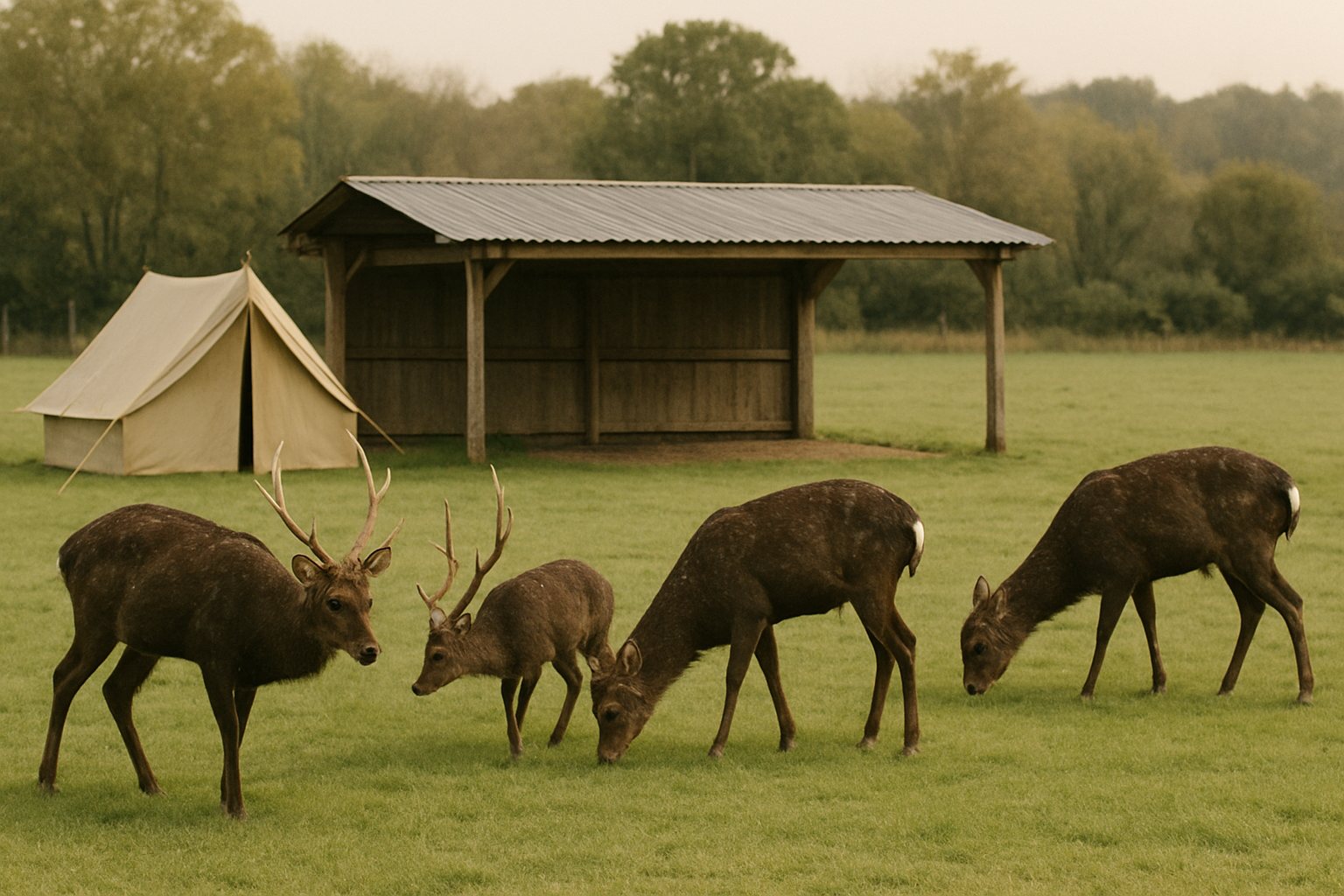
Sika are naturally shy and stick together, so they do much better in smaller, well-fenced camps with plenty of cover. These compact turf spaces help reduce stress, especially for new arrivals or breeding groups, and give the deer enough room to move but not so much that they feel lost or threatened. Keeping the camp compact also lets us monitor each animal more easily, which is important for spotting early signs of injury or illness. In our experience, sika settle faster and use the available forage more efficiently when the layout feels safe.
We use low-built, well-braced fences with a tight mesh apron to stop sika from squeezing under or through. Each compact camp has small shade clusters planted from karee, wild olive and witgat, with open strips of indigenous grass for grazing. We aim for a lightly sloped position, so water drains away in heavy rain but there's still shelter from the wind. Camps like these are always set with access to shade, fresh water and a quiet kraal for low-stress handling. For turf, we keep a mix of kweek, red grass and a little rye near shade for green pick, but avoid thick bush where sika can hide for days. Electric fencing gets a solar and battery backup, and each battery is ticked off on the fence round, because one is easily missed on a busy afternoon.
Maintenance is mostly about keeping the grass at the right height, rotating grazing, and making sure water troughs don’t leak and turn the camp muddy. We check for fence weakness after berg winds or big storms and trim back any new thorn bush that could tangle up the animals.
Compact sika turfs can be too small if you don’t allow for extra space during calving or if you let the forage run short, especially in an El Niño summer. Mistakes include underestimating how high sika can jump or how quietly they squeeze under loose wire, and missing routine fence checks. Planting the wrong trees, like fast-growing exotics, can cause trouble later with invasive species rules.
Every change of season, we walk the boundary for erosion and look closely for broken mesh, loose posts or animal tracks under the fence. In late winter and after heavy spring rain, we test water points and clear out any bush regrowth near the kraal.