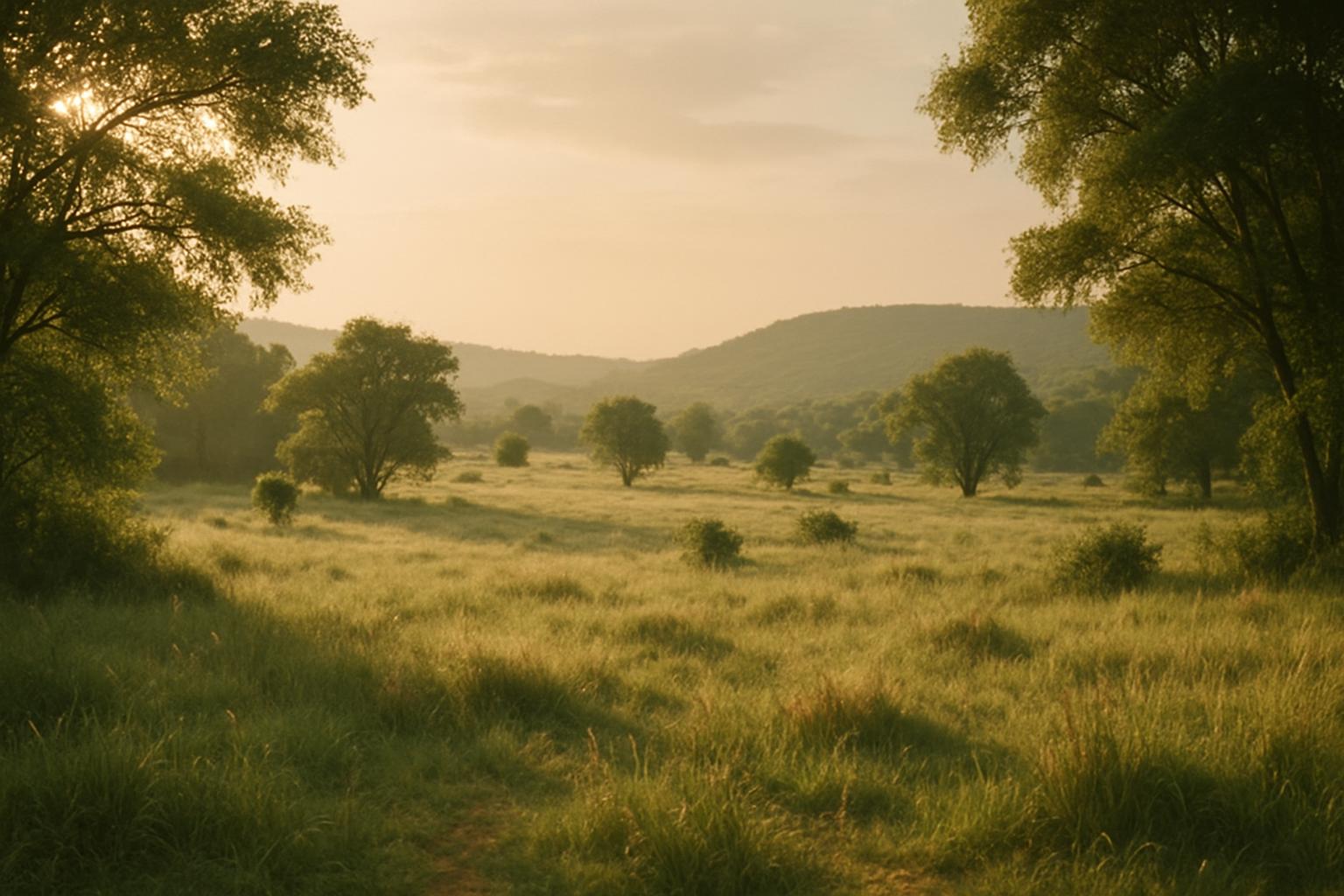
Pastures and camps
Woodland browse cover in axis deer camps brings shade, shelter and a steady supply of natural feed.
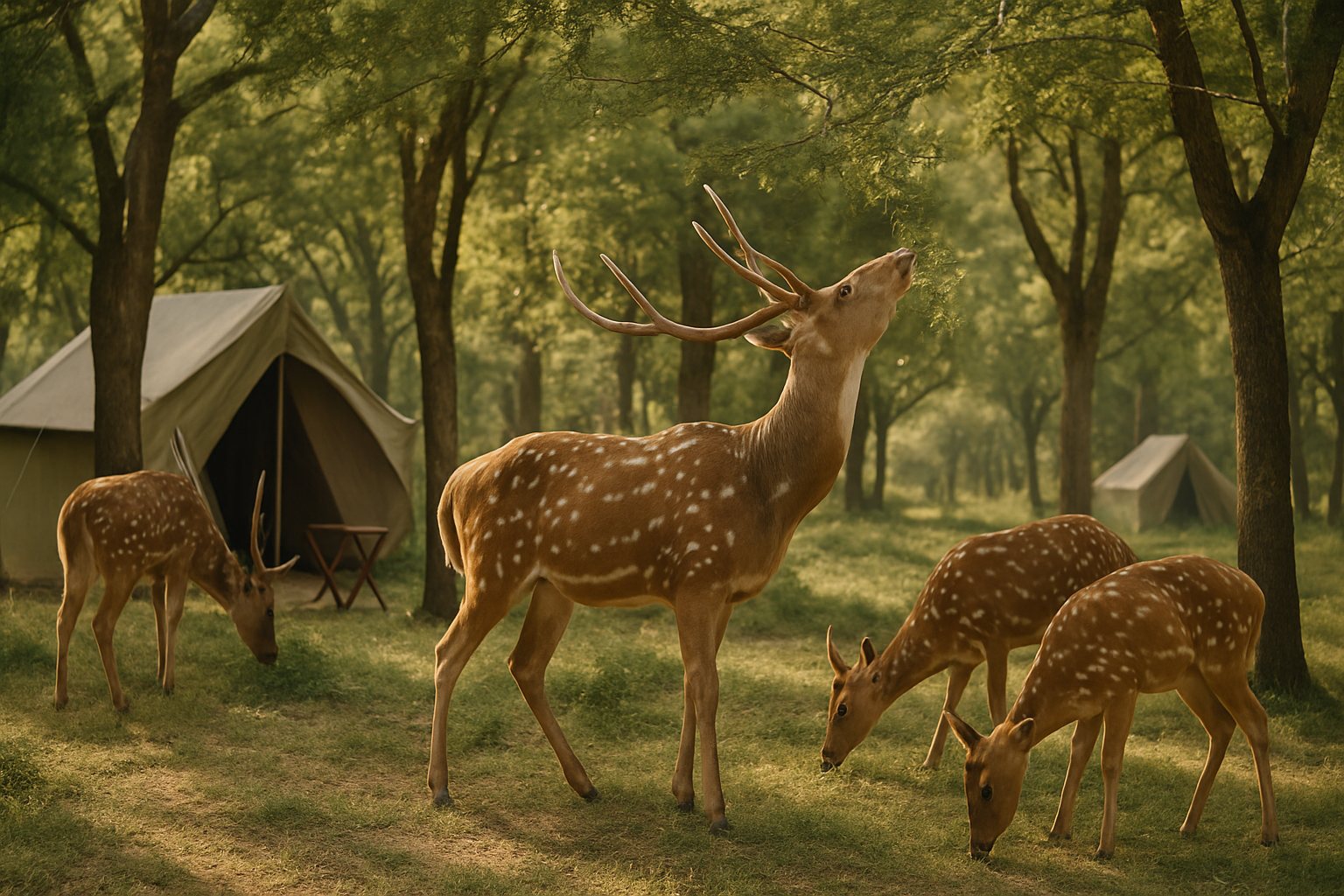
Axis deer, or chital, are woodland grazers by nature and need both browse and good shade to stay calm and healthy. In the wild, they move between glades, seeking cool cover and leafy branches to nibble throughout the day, especially in the midday heat. Without thick cover, axis deer can become restless and more vulnerable to stress and injury, especially during windy or hot spells.
When we manage camps with strong woodland edges and pockets of natural bush, deer use the same spots over and over, bedding down under the same trees and browsing a variety of leaves, twigs and fresh regrowth. This keeps the herd calmer, supports natural rumen health and reduces pressure on pasture, helping veld recover after dry seasons.
For axis camps, we fence around natural woodland patches, keeping enough space for deer to move between groves, shade and open grass. If woodland is sparse, we plant quick-growing local trees and shrubs such as sweet thorn (Acacia karroo), buffalo thorn (Ziziphus mucronata) and wild olive (Olea europaea subsp. africana) along natural drainage lines and north-facing edges for extra shade. We avoid invasive exotics and use windbreaks of local bush where possible.
We protect young saplings with mesh or brushwood guards until the bark is tough enough to handle light browsing. Watering is done with drip lines or hand-carried drums in the drier corners, especially after planting and during drought warnings. Fallen branches are left in place as extra shelter, and seasonal grass stands are cut high to leave some cover for fawns.
Over-clearing natural woodland is a common mistake, leaving deer exposed to sun, wind or sudden weather. Too few browse species can also lead to overbrowsing of one plant and poor herd health. In autumn and early spring we walk the camps with a bakkie and scout for signs of overbrowsed leaves, broken branches from rough play or storm damage, and any saplings with bark rubbed off by stags.
In very hot summers or during a strong El Niño warning, we check shade cover weekly and add extra brush piles for bedding if natural cover is thin. Any signs of erosion or compacted soil under favourite trees get a top-up of mulch or rough cut grass. If the veld is recovering after tough weather, we keep deer out of those corners until regrowth is strong.