Stories
From late November the fallow does start dropping fawns, and the farm changes pace.
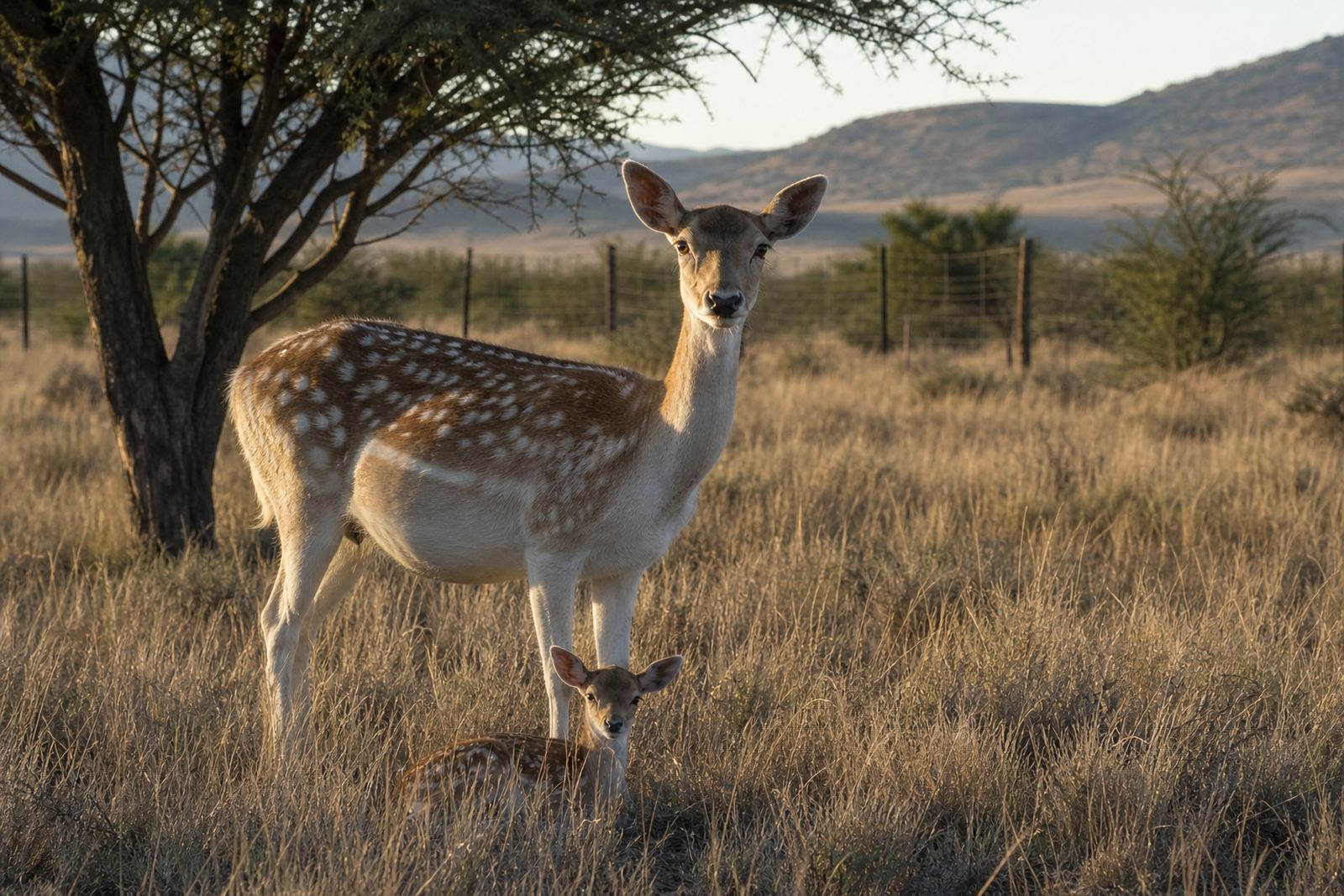
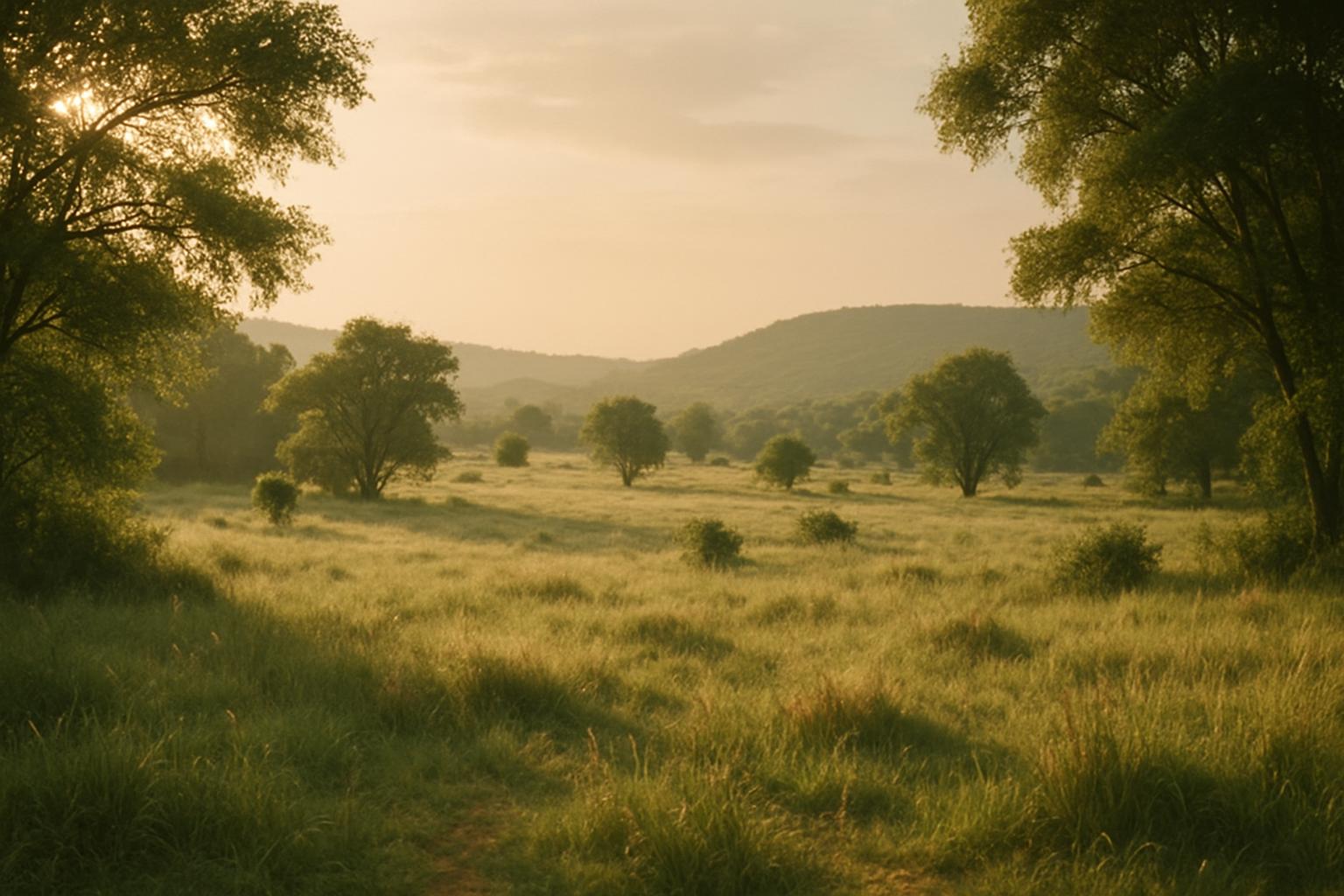
Every year, from late November into December, our fallow does give birth in the quiet corners of the camps. It is one of the most important times on the farm. What we do, and what we choose not to do, in these few weeks shapes the health of the herd for the whole year ahead.
A fallow doe hides her fawn in long grass or under bushes for the first days and only returns to feed it. If she is disturbed, she may move away and stay away longer than she should. So during fawning we keep vehicles, people and dogs out of the fawning camps as much as possible. Feeding rounds happen at the same times each day, on the same tracks, so the herd knows what to expect.
We still need to know that does are healthy and fawns are feeding. Most checks are done from a distance with binoculars, early in the morning and late in the afternoon when the herd is active.
We only step in if something is clearly wrong, and then quietly and with the vet on call.
Karoo summers are hot, and newborn fawns cannot move far to find shade or water. Before fawning starts we check that every camp has shade trees or shade cloth, and that troughs are low enough for young animals. Water levels are checked daily. In very hot spells we keep all work with the herd to the cool early hours.
Farm visits continue during December, but the fawning camps are off the route. Guests see the rest of the farm, the cold room and our fencing, and we talk about how fawning works from the viewing point. School and student groups at the Stellenbosch barn carry on as usual. If you have booked a visit, our team will explain the route on the day.
Not up close during fawning. Later in summer, when the fawns are moving with the herd, they are often visible from the viewing point.
No. Handling at this age risks the doe leaving the fawn. We only intervene if there is a clear welfare problem.
Usually from mid January, depending on how the season has gone. Ask us when you book.
Written by
Show visitors often ask about the Fallow Grove Herd at Karoo Edge.