Practice
Seasonal calving is carefully timed to match natural forage peaks and the timing needs of our lodge partners.
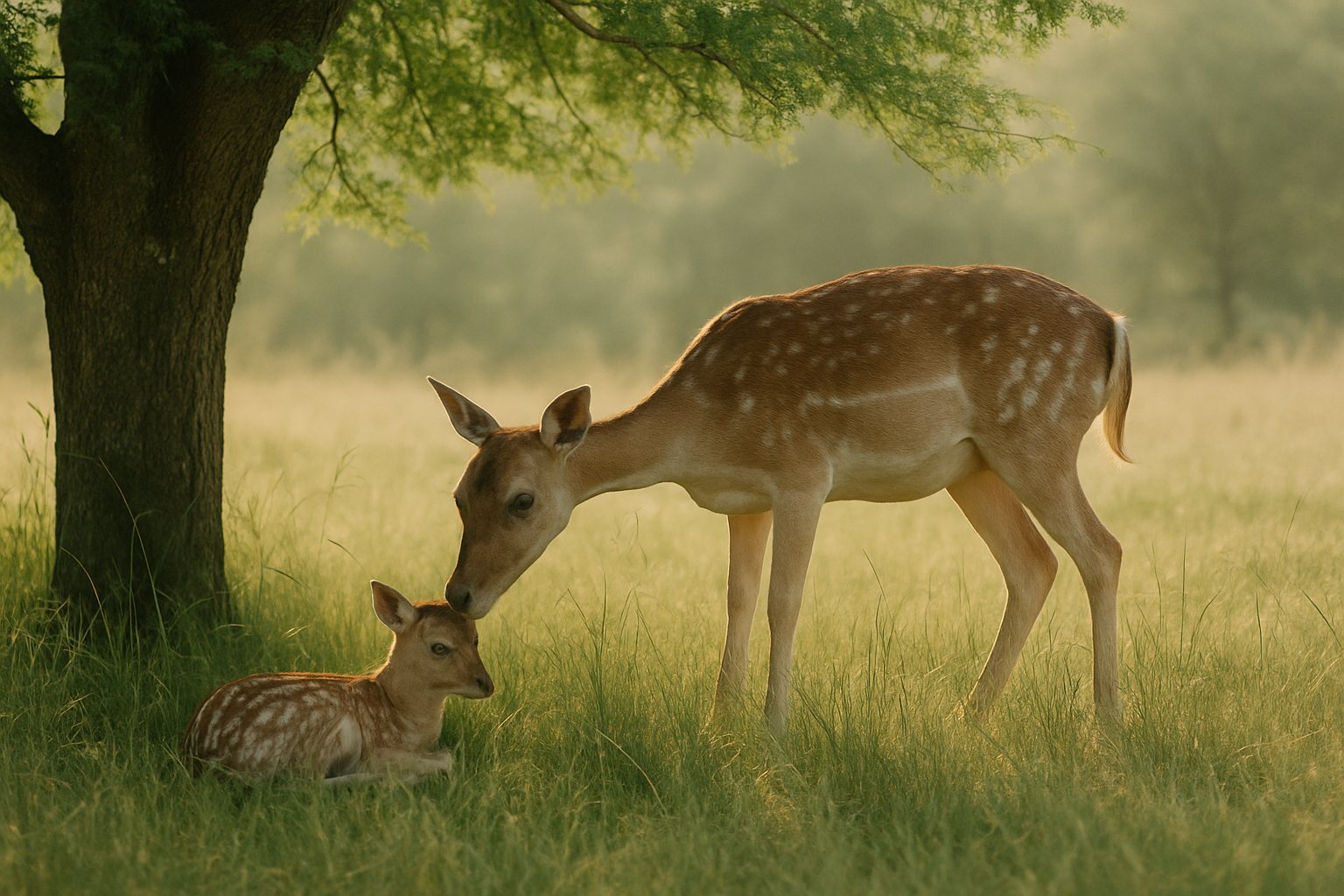
We plan our calving to bring fawns when veld offers the best nutrition and shelter. This benefits both herd health and venison quality, meeting steady restaurant demand.
In South Africa, aligning deer calving with the peak of natural veld growth gives fawns the best start. We run seasonal calving to use the green flush after early summer rains, when natural forage quality is highest and camps offer better cover against heat and wind. This approach supports fawn survival, healthy growth rates, and does' recovery. It also lets our Lodge Supply Herd and Fallow Grove Herd deliver consistent, top-quality venison to restaurants and farm shops from the July to September harvest window. Yearling Growth Pens allow us to manage younger animals’ nutrition after weaning, making sure they reach target weights for both stud and venison sales.
We synchronise breeding by managing stag introduction and withdrawal, allowing us to group calving across the main herds. In the Lodge Supply Herd, we introduce stags for the autumn rut in April. This timing means most fawns drop from November through December, when the veld is strongest. Fallow Grove Herds in cooler or more variable areas may start slightly later, following local green-up. Yearling Growth Pens come into play after weaning, where we manage a balanced ration and rotational grazing for steady growth. Throughout, our herd husbandry manager and our venison provenance manager monitor doe condition, pasture cover, and early signs of fawning. Our team records birth dates and fawn weights for each camp, especially in stud herds managed by our stud records lead. Where needed, we adjust camp rotation to give does peace and access to fresh water and browse.
Calving can go wrong if weather turns harsh, veld growth is slow after a dry spring, or if does are disturbed at a critical stage. We check all calving camps for shade, windbreaks and clean water, and move heavily pregnant does to camps with less competition. When a strong El Niño season is forecast, we put extra drought buffers in place and start pasture planning early. Foot-and-mouth controls under the new Animal Diseases Act mean we avoid unnecessary movement near calving, and keep strict veterinary oversight. All staff are briefed on quiet approaches and quick spotting of trouble, so if a doe struggles, our veterinary liaison officer can call in a game vet.
The seasonal cycle starts with veld walks and forage checks before joining stags. We plan calving for the months after the first rains and stay alert for changes in weather, because berg winds, sudden cold snaps or a dry spell can all affect fawn survival. Spring means extra checks, while early autumn brings weaning and a closer look at pasture recovery. With the invasive species regulations, we keep close records of all births and deaths, linking each animal to its permit and property. Staff rosters are set up so there’s always someone on call during peak calving, and our farm visits coordinator organises education days for students and future deer farmers. For any queries or farm visits, please send a message through our contact form.
Days on the farm
Verified Google reviews