Practice
Our veterinary protocols follow seasonal herd health calendars drawn up with experienced South African game veterinarians.
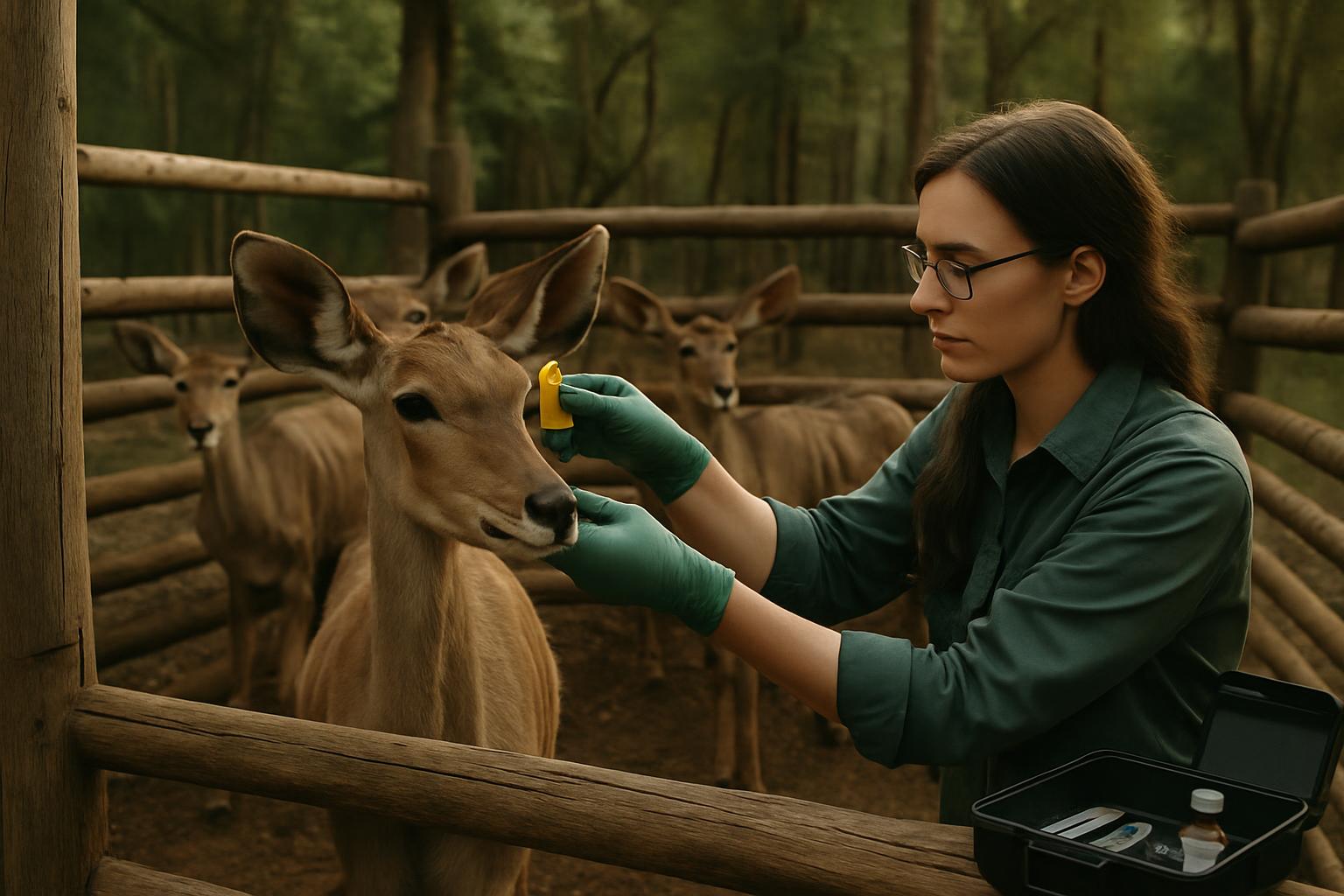
We work closely with game veterinarians to draw up seasonal health calendars, tailored for deer in South African veld conditions. Each protocol is practical, legal and shaped by real-life weather, forage and disease risks on our farms.
On a South African deer farm, veterinary protocols shape the whole working year. They set the daily animal care routine, shaping everything from feed schedules and vaccinations to record keeping and movement controls. These routines are drawn up with input from trusted game veterinarians who understand the species we keep and the local risks at Karoo Edge, near the Mbombela gate, in the KZN Midlands and at Stellenbosch.
Our protocols serve many people: the herds themselves, by keeping them healthy and calm; our team, by giving clear plans to follow; permitted game and deer farmers buying from our stud; and the chefs, butchers and lodge kitchens that depend on safe, traceable venison. Training, practical reminders and written checklists keep everyone aligned in the kraal, the camp and the cold room.
Each year, we sit down with our local game veterinarians to review and update the herd health calendars for our fallow, red, sika and chital deer herds. We map out the routine vaccinations, parasite control, mineral supplementation and any special treatments for high-risk groups like yearlings and breeding hinds. These plans tie in with our 'Sika Quiet Pasture' recovery system, 'Yearling Growth Pens' and the 'Stud Breeding Programme'.
The steps are practical. We inspect camps and check animals for signs of stress or disease, using a low-stress handling approach led by our herd husbandry manager. Our veterinary liaison officer coordinates all veterinary visits and ensures our health records match legal requirements. Special attention is given to pregnant does and young fawns, especially as the seasons change.
The biggest risks on any deer farm are missed signs of disease, delayed treatment or lapses in routine that allow parasites or infections to settle in. Our team relies on detailed training, a practical checklist system and regular, calm observation of each camp to catch early warning signs. If a deer is off its feed or limping, it is separated quietly for assessment.
We follow strict biosecurity: disinfecting boots and bakkies at entry points, changing outerwear between camps, and keeping visitor contact to a minimum where needed. With foot-and-mouth disease controls tightened under the Animal Diseases Act, we do not move any live animals from any farm under movement control or veterinary quarantine. Only animals cleared by the state veterinarian, with permits, travel for stud sales. Our cold chain and abattoir procedures are designed to prevent cross-contamination.
South African seasons bring unique challenges: dry berg winds in Karoo autumns, cold Midlands mist in midwinter for the axis, and El Niño springs with heat and low rainfall. We adjust protocols to weather and veld: mineral licks and shade in summer, extra parasite checks in the wet season, and drought buffers built into feed plans by our pasture and forage manager.
Legal duties shape every vet protocol. Category 2 deer need valid permits and must stay on the right land, which we check before any stud sale or farm visit. Only trained and named staff administer treatments, under veterinary advice. Our team meets each spring to update health calendars for the next year, guided by seasonal disease risks and state veterinary notices.
If you need more details or wish to visit on a college education day, please send a message through our contact form to arrange a date.
Days on the farm
Verified Google reviews