Practice
We work only with a registered partner abattoir and keep a strict cold chain from the abattoir chiller to the Karoo Edge cold room.
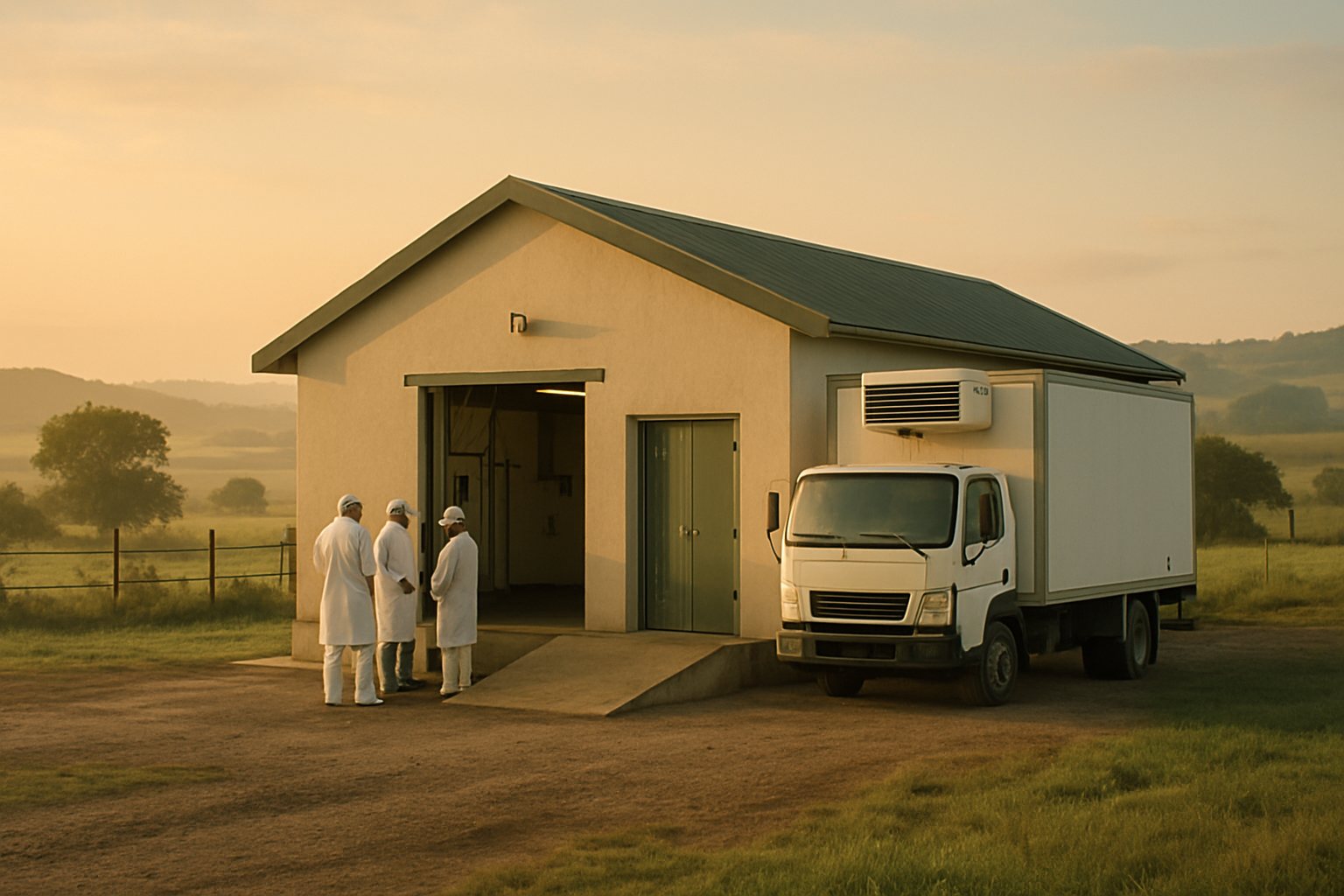
We send our deer to a registered partner abattoir; we do not own an abattoir or a processing plant. Each lot is slaughtered, chilled, cut and packed there, then held in the Karoo Edge cold room before delivery.
Deer that travel calm and rested give venison with a better pH and colour. Deer Farming serves farm-to-table restaurants, chefs, butchers and our own Farm Table Venison and Hybrid Venison Line buyers by working only with an abattoir registered under the Meat Safety Act. The abattoir team handles game regularly, keeps the lairage quiet and follows every regulation for food safety and animal welfare. The result is meat that stays tender and flavourful, with traceability from veld to vacuum-pack.
Lodge Supply Herd venison goes through just the same careful chain, with named lots and provenance records for every batch. Each box carries the lot number that links it to the camp, the abattoir slot and the Karoo Edge cold room log.
The harvest window is planned with the abattoir and cold-chain partner to suit weather, demand and animal condition. On harvest day, our team gathers and checks the selected deer, always under the guidance of our venison provenance manager for named lots, and our veterinary liaison officer with the game veterinarian where required. The animals are moved calmly to minimise stress, then loaded quietly into a shaded, well-ventilated stock trailer for the short drive to the abattoir.
Our Farm Table Venison, Hybrid Venison Line and Lodge Supply Herd all follow these steps. The abattoir is ready when the trailer arrives, the deer rest in its lairage before slaughter, and the carcasses go straight into the chiller. The abattoir butchers cut and pack each lot, which then goes to the Karoo Edge cold room (or the Mbombela gate cold room for Lodge Supply) and out to chefs and butchers by refrigerated vehicle. All paperwork is double-checked before the trailer leaves. On one rushed morning we still forgot a pen for the abattoir register and had to borrow one at the gate.
A late trailer or a warm chiller can cost a whole lot. Delays at any point can mean tougher meat or spoilage, so we only harvest to order and in suitable weather. The partner abattoir has generator backup during power cuts, and every chiller and stock trailer is checked ahead of each run. We tag and log each animal before departure. If a road closure or breakdown holds up the trailer, the driver parks in shade, keeps the deer quiet and calls the abattoir to move the slaughter slot.
Harvests never take place in extreme heat, driving rain or berg winds, since these can all raise stress in the herd and affect meat quality. We keep staff trained and never overload a team, so no one is rushed. Each group must reach the abattoir in its booked slot, calm and rested, so the driver keeps to the planned route and speed.
Venison supply is shaped by the seasons, the veld and the needs of our buyers. Our one harvest window runs from July to September, after the autumn rut and before calving in November and December, when cool weather also helps the cold chain. On warm days in the window, loading is planned for the cool of early morning. When the South African Weather Service forecasts a strong El Niño, we increase cold room checks and may shorten harvest runs to prevent any risk to meat quality.
Permits and abattoir bookings are arranged well in advance, especially for export and larger orders. Our team reviews all health, movement and meat safety rules as they change. Staff are rotated to keep everyone sharp, and our venison provenance manager checks with the abattoir before every harvest week. To ask about our harvest window or cold-chain partners, send a message through our contact form.
Buyers and partners
Verified Google reviews